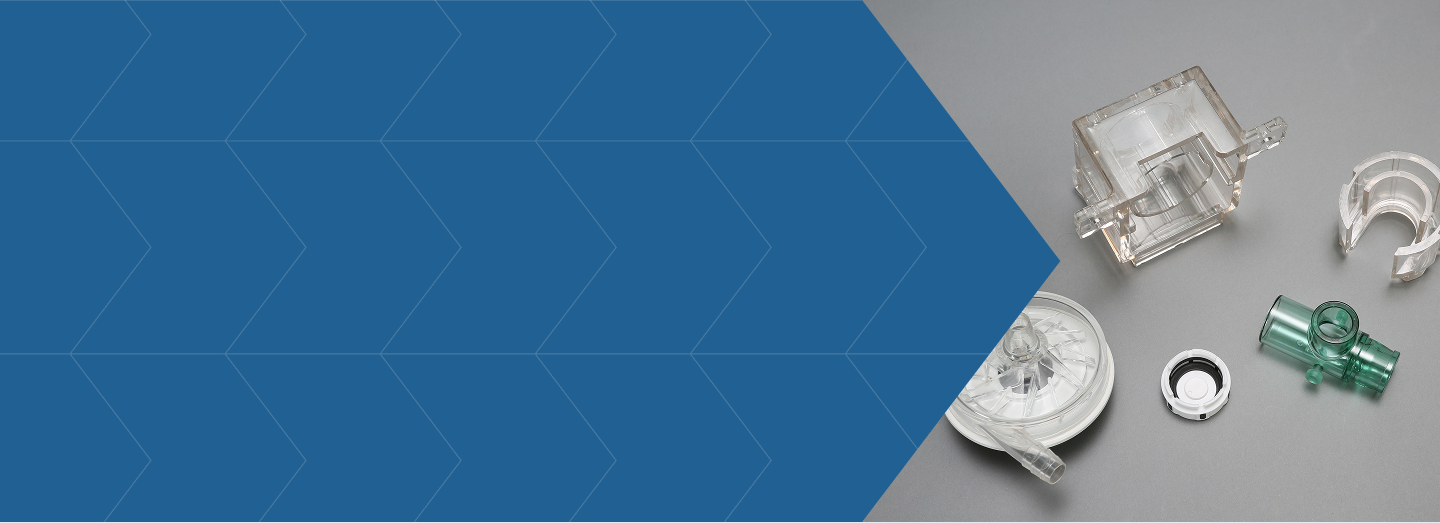
Medical plastic components often begin with a demanding set of requirements. Parts may need to maintain precise dimensions, withstand repeated use, meet material specifications, integrate with larger assemblies, and perform consistently across thousands of production cycles.
For engineers, selecting a medical injection molding supplier is an important part of decision-making throughout development, including material selection, design for manufacturability (DFM), prototyping, tooling, validation, and production.
Choosing a supplier that can support the entire product lifecycle creates a clearer path from an early design to repeatable manufacturing.
Start with Engineering Support Before Tooling
A successful medical injection molding program begins before the mold is built.
Early engineering collaboration gives teams an opportunity to evaluate how a component’s geometry will behave during molding. Features that work well in a CAD model may introduce challenges related to material flow, cooling, ejection, or dimensional stability.
A thorough design for injection molding review may evaluate factors such as:
- Wall thickness and transitions
- Draft angles
- Ribs and structural features
- Gate placement
- Material flow
- Critical dimensions and tolerances
- Assembly requirements
Addressing these considerations early can reduce tooling revisions and create a more predictable production process. For medical components with strict performance requirements, early DFM input also helps engineers align design intent with actual molding conditions.
Use Prototyping to Validate More Than Geometry
Prototyping gives engineering teams a practical way to learn before committing to production tooling.
Medical injection molding suppliers with integrated prototyping capabilities can help engineers evaluate fit, form, function, materials, and assembly requirements through progressive design iterations. Depending on the program, methods may include 3D printing, silicone casting, material testing, and other rapid prototyping processes.
Effective prototypes should answer specific engineering questions. Does the component interface correctly with surrounding parts? Are wall sections adequate? Does the selected material provide the required performance? Will a design feature create problems when translated into injection molding?
Evaluate Material Selection and Compatibility
Material selection is especially important for medical components because resin properties influence both product performance and manufacturing behavior.
Engineers may need to consider strength, rigidity, chemical resistance, temperature exposure, wear, moisture, dimensional stability, and other application-specific requirements. Material certifications and compatibility requirements may also influence resin selection.
Experienced medical injection molding suppliers should be able to evaluate materials from both perspectives: how the polymer performs in the application and how it behaves during manufacturing.
That knowledge can help engineers identify potential issues involving shrinkage, warpage, filling, cooling, or long-term durability before they affect production.
Plan the Transition from Prototype to Production
A prototype that performs correctly is an important milestone, but production introduces a different set of variables.
Higher volumes require engineers and suppliers to account for tooling durability, process repeatability, cycle times, material consistency, inspection, and throughput. This makes it valuable to select a supplier that understands the complete path from prototype development through full-scale plastic injection molding.
Keeping engineering, prototyping, mold development, and production closely connected can also preserve knowledge throughout the program.
For engineers, this continuity can mean fewer variables during production ramp-up.
Look Beyond the Molding Press
Medical products frequently require more than an individual molded component. Parts may need secondary operations, assembly, joining, marking, electronics integration, or functional testing before they are ready for the next stage of manufacturing.
When evaluating suppliers, engineers should consider the entire scope of the program.
Relevant capabilities can include:
- Mold design, production, and maintenance
- Assembly and sub-assembly
- Ultrasonic welding and adhesive bonding
- Post-machining
- Decorating, painting, and marking
- Electronics integration
- Flow and leak testing
- Design verification and validation support
A supplier with broader capabilities can help simplify coordination and provide greater visibility across the manufacturing process.
What to Look for in Medical Injection Molding Suppliers
The best supplier fit depends on the application, but engineers should evaluate more than available machine capacity or piece-part pricing.
Look for a partner with demonstrated experience in precision molding, strong DFM and polymer expertise, prototyping capabilities, process controls, quality systems, and the ability to support production at the required scale. It is equally important to understand how the supplier communicates engineering concerns and manages the transition between development stages.
For medical programs, reliable manufacturing starts with a process designed around consistency from the beginning.
Move Your Medical Injection Molding Project Forward with DWE
Dave Wheatley Enterprises (DWE) supports demanding medical and precision plastic applications with integrated engineering, prototyping, custom mold design and build, injection molding, assembly, finishing, and testing capabilities. DWE’s services support projects ranging from prototypes and one-off parts through high-volume production.
If you are evaluating medical injection molding suppliers for a new component or preparing an existing design for production, contact DWE to discuss your requirements and take the next step toward a production-ready solution.